
The 6 Most Expensive Mistakes Developers Make — And How to Avoid Them

The 6 Most Expensive Mistakes Developers Make — And How to Avoid Them

For project owners, consultants, and real estate decision-makers who want to build smarter, faster, and without regret.

In construction and development, the biggest costs don’t always come from the materials or the land. They come from mistakes — silent, creeping issues that show up when it’s already too late to fix them easily.

Whether you’re developing your first commercial tower or your 50th residential complex, the reality is the same: small missteps in the beginning can cost you millions by the end.

Based on our experience across high-stakes projects in Saudi Arabia and the GCC, here are the top six mistakes that silently drain your budget — and what you can do to avoid them:

1. Poor Planning

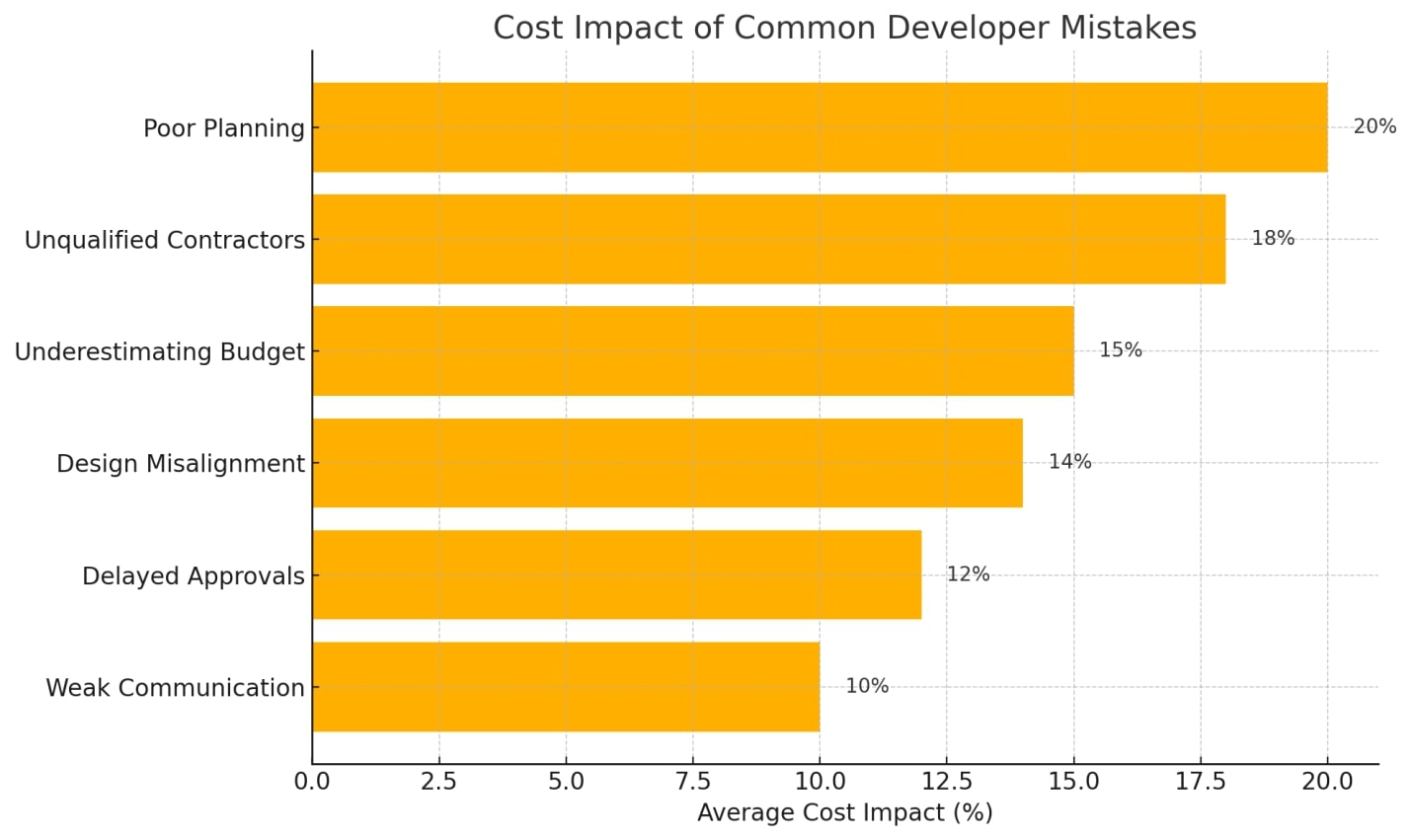
Average Cost Impact: 20%

Rushed planning leads to rework, delays, and mounting stress. Developers who don’t invest in realistic timelines, contingency buffers, and clear scopes often find themselves backtracking at critical stages. The fix? Start with a bulletproof roadmap.

2. Hiring Unqualified Contractors

Average Cost Impact: 18%

Low-cost contractors may win the bid, but they rarely win the outcome. We’ve seen everything from weak safety protocols to delayed mobilizations — and the cleanup always falls on the owner. Always vet for proven execution, not just low price.

3. Underestimating Budget Requirements

Average Cost Impact: 15%

Unrealistic budgets can starve a project midway. Underbudgeting materials, manpower, or even permits causes expensive pauses. Savvy developers ensure their estimates are cross-verified with market data and expert validation.

4. Design Misalignment with Site or Goals

Average Cost Impact: 14%

A beautiful design that doesn’t suit the environment, budget, or future use will eventually become a costly regret. We always advise early collaboration between architects, MEP experts, and contractors — not after the fact.

5. Delayed Approvals and Regulatory Setbacks

Average Cost Impact: 12%

Navigating approvals in the Kingdom can be complex. Misunderstanding local codes or documentation gaps delays progress. Partnering with firms who understand regional regulations is not optional — it’s survival.

6. Weak Communication Between Stakeholders

Average Cost Impact: 10%

The biggest silent killer: misalignment. When the consultant, developer, and contractor aren’t in sync, the cracks show — in delivery, budget, and timelines. Weekly coordination reviews and digital dashboards are now industry best practices.

💡 The Cost of Getting It Wrong

Just look at this breakdown:
How to Build Smarter

If you’re a consultant or developer in Saudi Arabia, it’s not enough to build — you need to build right.

At SABQ, we’ve engineered a proprietary “Efficiency Blueprint” designed to reduce these risks before they even begin — and it’s already trusted by top developers across the Kingdom.

Want a copy? Click here to get it now — and avoid the 25% trap.

Your project deserves more than hope. It deserves precision.
Let’s build it right — from the first step.
Beyond the Blueprint: How Top Developers Are Saving Millions Through Smarter Execution

For real estate owners, consultants, and project leads who know a great design is just the beginning.

Every ambitious project starts with a set of drawings — elevations, sections, BOQs, and a consultant’s sign-off.

But here’s the truth no one talks about: Drawings don’t build buildings. Execution does.

And that’s where most cost overruns, delays, and missed opportunities happen — not because the plan was wrong, but because the delivery lacked precision, coordination, and foresight.

At SABQ, we’ve worked behind the scenes of some of the most demanding projects across the Kingdom — and we’ve seen a pattern: The developers who save the most money, deliver ahead of schedule, and get the fewest surprises are the ones who treat execution like a system — not an afterthought.

🔍 Here’s How They Do It:
1. Early Collaboration with Execution Experts

The best developers don’t wait until after design to bring in their contractor. They involve a delivery-minded partner from day one — someone who can flag constructability risks, advise on material lead times, and align scope to budget before ground is broken.

2. Transparent Cost Planning, Not Guesswork

Top firms are done with vague estimates and “approximate” BOQs. They demand detailed cost mappings — with clarity on labor productivity, material fluctuation risks, and real-world logistics. It’s not about cutting costs. It’s about understanding them before they hit you.

3. Digital Site Oversight & Weekly Accountability

The future-ready developers we work with use dashboards, not excuses. They track progress, manpower, and variations in real-time — not through end-of-month surprises. A 15-minute alignment call every week can save you three months of firefighting.

4. One Partner. End-to-End Responsibility.

Fragmented vendors = fragmented accountability. Our most successful clients don’t want 5 vendors blaming each other. They want one partner who owns it all — from enabling works to final finishes.

📊 The Impact of Smarter Execution

In one recent office HQ build in Riyadh:

  • 18% cost reduction was achieved without touching quality
  • 1.5 months ahead of schedule due to smart site sequencing
  • 0 design changes post-approval — because we aligned everything early
✅ Want to Do the Same?

We’ve documented every insight and method we use into a free guide called the Efficiency Blueprint — now available for serious project owners in KSA. Claim your copy here — and start building the way the best already do.

Drawings are the dream. Execution is where it lives or dies. Let’s make yours a success story.

Biophilic Design in Commercial Projects: Why Nature Indoors Is More Than a Trend

Introduction: Where Nature Meets Innovation

In today’s fast-paced world of concrete and construction, something remarkable is happening—nature is making a comeback inside our most modern buildings. What once seemed like a design trend is now becoming an essential part of high-performance commercial spaces. Biophilic design isn’t just about adding plants—it’s about building with the human experience at the center.

And in the Middle East, where urban development is surging and the climate can often feel harsh, bringing nature indoors is no longer optional—it’s smart.

What Is Biophilic Design?

Biophilic design integrates elements of nature into the built environment. Think of:

  • Natural light flooding through large glass facades
  • Indoor greenery that improves mood and air quality
  • Organic materials like wood and stone
  • Water features or patterns that mimic nature

It’s architecture designed not just for function, but for human connection, calm, and clarity.

Why It Works: The Numbers Don’t Lie

A growing body of research shows the clear ROI of biophilic spaces:

  • 📈 15% boost in productivity when employees work in environments with natural elements
  • 🧠 Reduced stress and anxiety levels
  • 💼 Enhanced perception of brand and quality in commercial and retail settings
  • 🌱 20–25% energy savings by using natural daylight and airflow

In Saudi Arabia’s commercial developments, where efficiency, prestige, and wellness matter, these benefits resonate deeply.

Where It Fits: Real-World Commercial Uses

From Riyadh to Khobar, visionary developers are embracing biophilic design in:

  • Corporate offices: Green walls and indoor courtyards boost focus and client experience
  • Retail malls: Natural lighting and shaded greenery create a relaxed, premium feel
  • Healthcare facilities: Nature supports healing—reducing recovery time and improving patient satisfaction
  • Hospitality spaces: A key differentiator for luxury properties looking to inspire longer stays
The Saudi Context: Cultural and Climatic Harmony

Biophilic design aligns beautifully with Saudi values of harmony, heritage, and hospitality. And with smart insulation and material planning, it supports Vision 2030’s push for sustainability and lifestyle upliftment—all while reducing operational costs.

Your Next Step: Design That Breathes Life into Every Space

If you’re developing a commercial space in the Kingdom, this isn’t just a design decision—it’s a human one. Biophilic design helps your project stand out, feel alive, and perform better in every sense.

Want to explore how biophilic design can elevate your project? Let’s start with a conversation. Click the link below.